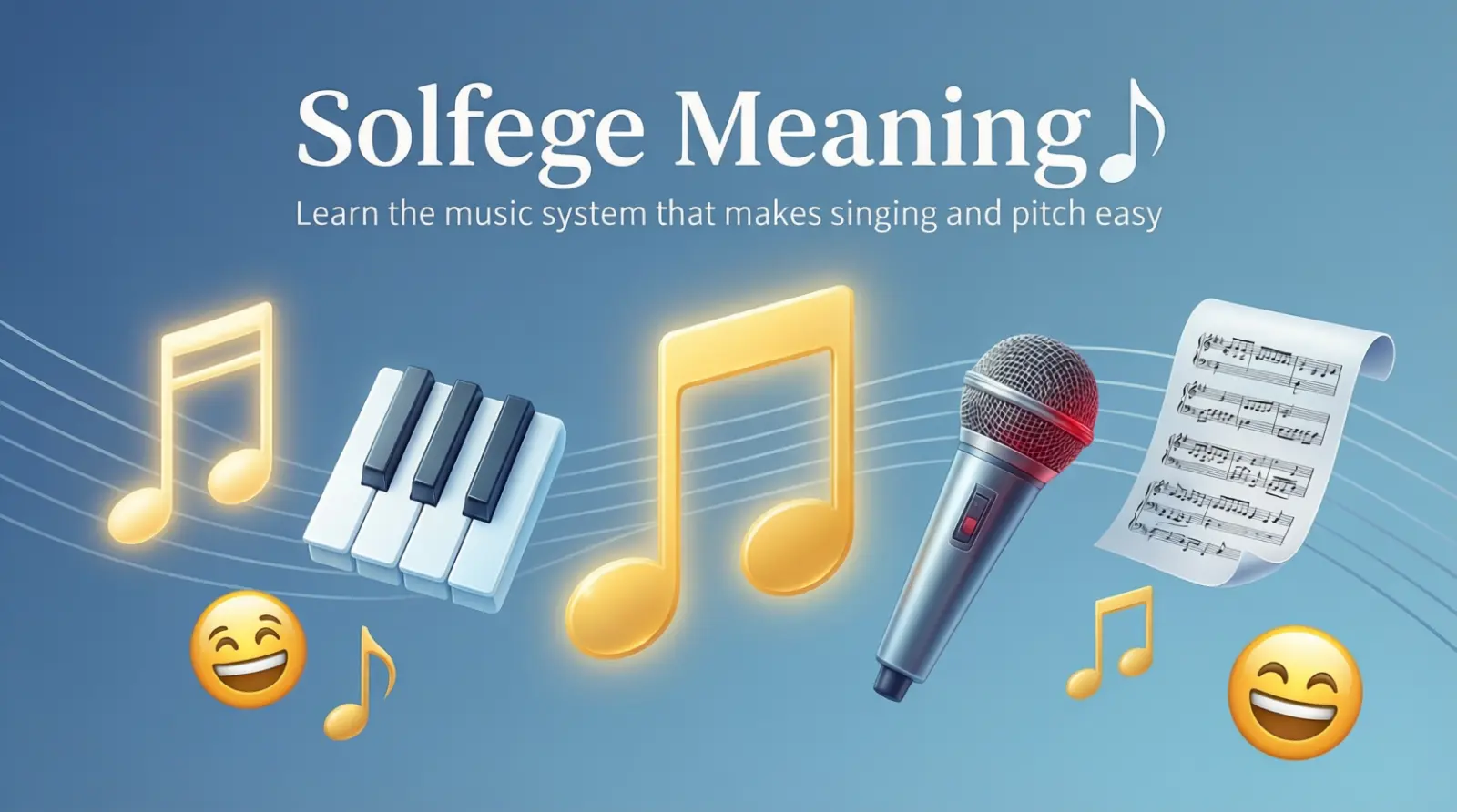
Scrolling through music apps, educational TikTok videos, or even your friend’s WhatsApp messages, you might come across the term “Solfege” and wonder,
“Wait, what does that even mean?” It’s normal to feel confused at first music terminology can be tricky! Solfege is more than just a random word;
it’s a foundational tool that musicians, singers, and students use worldwide.
Quick Answer:
Solfege means “a system of assigning syllables to musical notes.” It’s a friendly and educational term used to teach pitch, sight-singing, and musical scales.
🧠 What Does Solfege Mean in Text?
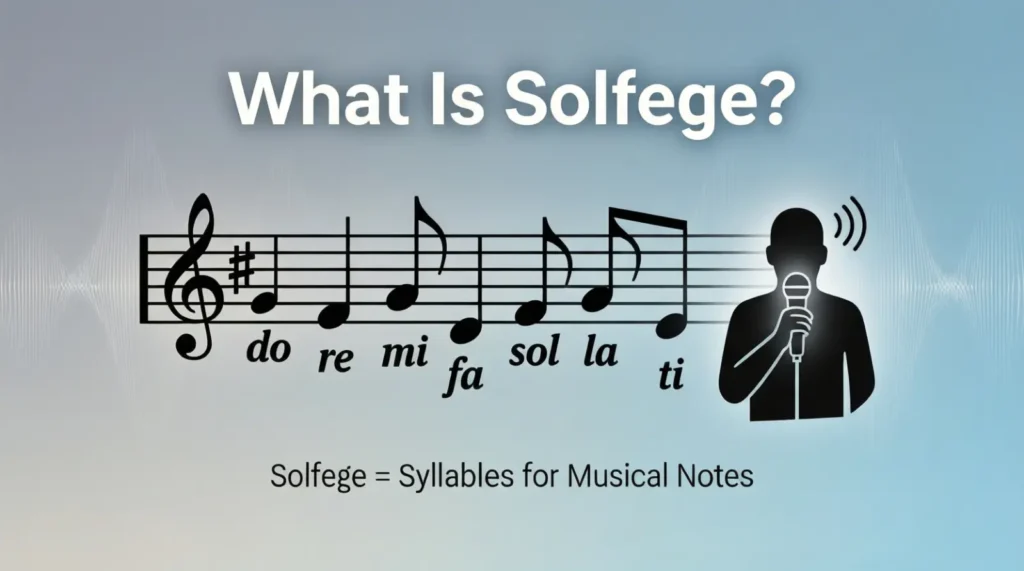
Solfege refers to a music education system where each note of a scale is given a specific syllable: do, re, mi, fa, sol, la, ti, do. This system helps singers and musicians identify pitch and sing accurately, and it’s commonly used in music theory lessons, choir practices, and even casual music discussions online.
Example:
- “I practiced the song using solfege: do-re-mi-fa-sol 🎶”
In short: Solfege = Syllables for Musical Notes = A method to learn pitch and sight-singing.
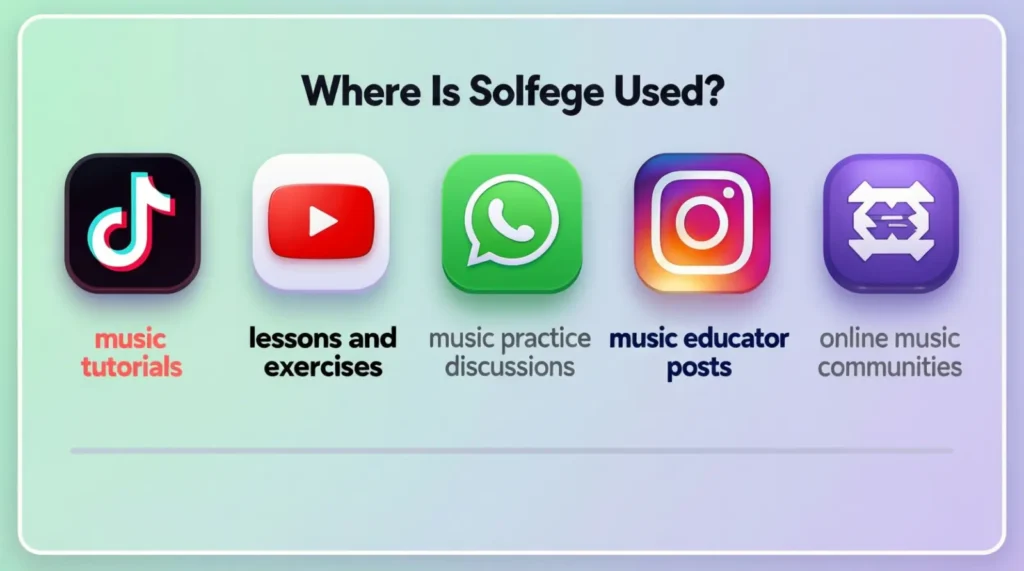
📱 Where Is Solfege Commonly Used?
Solfege is mostly used in music education, online tutorials, and casual music discussions. While it’s primarily educational, it has made its way into social media and music-related chats.
Common platforms include:
- 📹 TikTok: Short music tutorials and singing exercises
- 🎥 YouTube: Music lessons and theory explanations
- 💬 WhatsApp / Text messages: Discussing music practice or sharing exercises
- 🎵 Instagram: Reels or posts by music educators
- 🖥️ Discord / Music forums: Online music communities and group lessons
Tone & Style:
- ✅ Casual, educational, and friendly
- ❌ Not formal business slang, but works in informal learning contexts
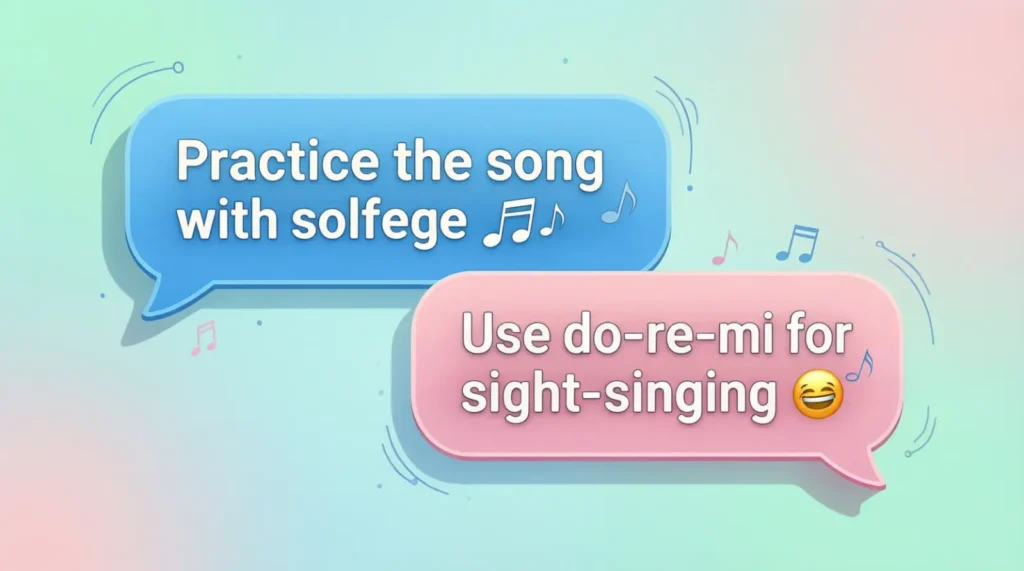
💬 Examples of Solfege in Conversation
Here are realistic chat-style examples showing how people actually use Solfege:
Example 1:
A: “How do I learn this song?”
B: “Try it with solfege first, it helps with the notes 🎶”
Example 2:
A: “I keep singing the wrong pitch 😩”
B: “Use solfege, it makes sight-singing easier 😄”
Example 3:
A: “What does do-re-mi mean?”
B: “That’s solfege! Each syllable is a note in the scale 🎵”
Example 4:
A: “Can we practice together?”
B: “Sure! Let’s start with solfege exercises 🎶”
Example 5:
A: “This song is tricky”
B: “Break it down using solfege, trust me 😎”
Example 6:
A: “Do you know solfege?”
B: “Yeah, it’s do-re-mi for every note 😄”
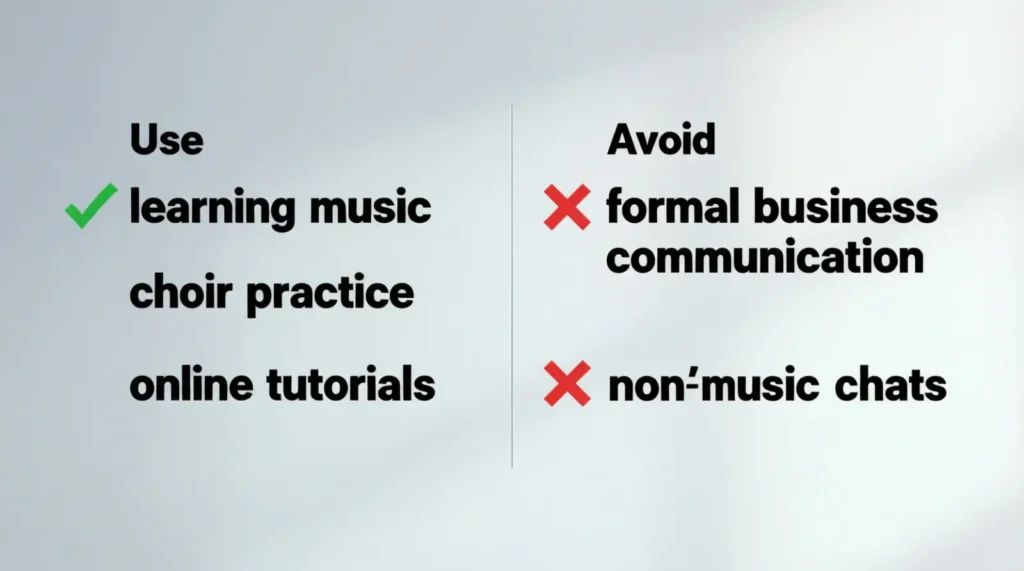
🕓 When to Use and When Not to Use Solfege
✅ When to Use Solfege:
- Teaching or learning music
- Sight-singing practice
- Discussing music online or with friends
- Choir practice or group music lessons
❌ When Not to Use Solfege:
- Professional business emails
- Legal or formal documents
- Casual non-music discussions
- Urgent or serious situations unrelated to music
Context Comparison Table:
| Context | Example Phrase | Why It Works |
|---|---|---|
| Friend Chat | “Practice that song with solfege 😄” | Casual & educational |
| Group Chat | “We’ll start with solfege exercises 🎵” | Fun & collaborative |
| Work Chat | N/A | Not suitable |
| N/A | Not appropriate |
🔄 Similar Slang Words or Alternatives
| Slang | Meaning | When to Use |
|---|---|---|
| Do-Re-Mi | Notes in solfege | Casual music discussions |
| Sight-singing | Singing music directly from sheet music | Music lessons, choir practice |
| Ear Training | Exercises to identify pitch by ear | Online music tutorials, practice |
| Music Theory | Understanding notes, scales, chords | Classes, online lessons |
| Pitch Practice | Practicing correct pitch | Personal music practice |
❓ FAQs About Solfege
❓ Is Solfege hard to learn?
Not really! With consistent practice, solfege becomes an intuitive way to read and sing music.
❓ Can beginners use Solfege?
Absolutely! Solfege is perfect for beginners and helps establish a strong foundation in music.
❓ Is Solfege only for singers?
No. Musicians who play instruments also use solfege to learn scales, melodies, and improve pitch recognition.
❓ Can Solfege be used online?
Yes! TikTok, YouTube, and Discord communities often use solfege exercises for interactive learning.
❓ Is Solfege formal or casual?
It’s educational but friendly and casual in online discussions or music practice chats.
✅ Final Thoughts
Solfege may sound like a complex musical term at first, but it’s really just a fun, friendly way to learn notes, sight-singing, and pitch. If you’re a beginner singer, a music student, or just curious, understanding solfege can make your music journey easier and more enjoyable. Incorporate it in your practice, online discussions, or even casual chats about music, and you’ll see your skills improve fast!

I’m Emily Perniks, a writer who loves sharing heartfelt wishes and inspiring words. I find joy in creating messages that connect people through warmth and positivity. Each piece I write reflects my passion for kindness and meaningful expression. Through my words, I hope to bring comfort, smiles, and genuine emotions to others.