Have you ever sent a message and received a simple “ok” in reply? At first, it might seem harmless, but sometimes it can leave you wondering what the person really means.
Are they agreeing? Are they annoyed? Or are they just acknowledging your message quickly?
This tiny two-letter reply is one of the most common responses in texting, yet it can carry different meanings depending on the situation and tone.
Quick Answer:
OK means “okay” or “all correct.” It’s a casual and neutral way of acknowledging, agreeing, or confirming something in a text conversation.
In everyday texting, people use ok to show they understand a message, agree with something, or simply acknowledge what someone said.
What Does OK Mean in Text?
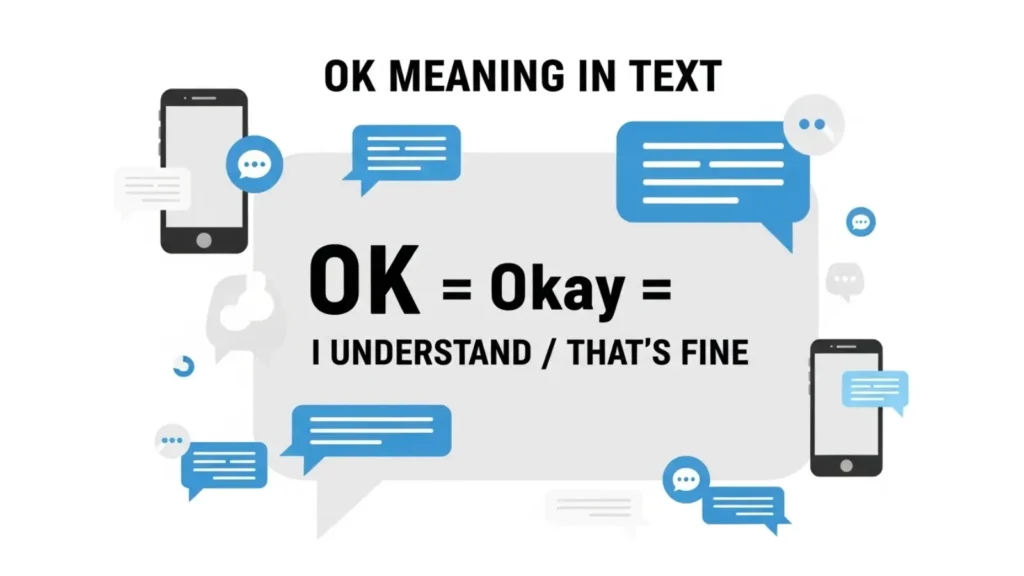
In texting, OK simply means “okay,” “I understand,” or “that’s fine.” It’s a short way to acknowledge a message without writing a long reply.
The word OK originally came from the phrase “oll korrect” (a humorous spelling of “all correct”) in the 1800s. Over time, it became one of the most widely used words in English — especially in texting.
Today, ok is used in digital conversations to confirm information, agree with someone, or indicate that everything is understood.
Example sentence:
“meet me at 7 outside the cafe.”
“ok 👍”
In this example, ok simply means “I understand and agree.”
In short: OK = Okay = I understand / That’s fine.
Where Is OK Commonly Used?
Because it’s short and easy to type, ok appears almost everywhere in online communication.
Here are the most common places where people use it:
📱 Text messages
People often reply with “ok” to quickly acknowledge information.
👻 Snapchat chats
Short replies like “ok” or “ok lol” are common in casual conversations.
📸 Instagram DMs
Friends often respond with “ok” to confirm plans or react to messages.
🎵 TikTok comments
Users sometimes say “ok” in comments to show agreement or understanding.
🎮 Gaming chats (Discord or in-game)
Gamers use “ok” to acknowledge instructions or strategies.
💻 Group chats
When many people are talking, “ok” helps confirm that someone read a message.
Tone:
- Mostly casual
- Sometimes neutral
- Rarely formal
While it’s common in everyday texting, “ok” alone can sometimes feel short or cold depending on the context.
Examples of OK in Conversation
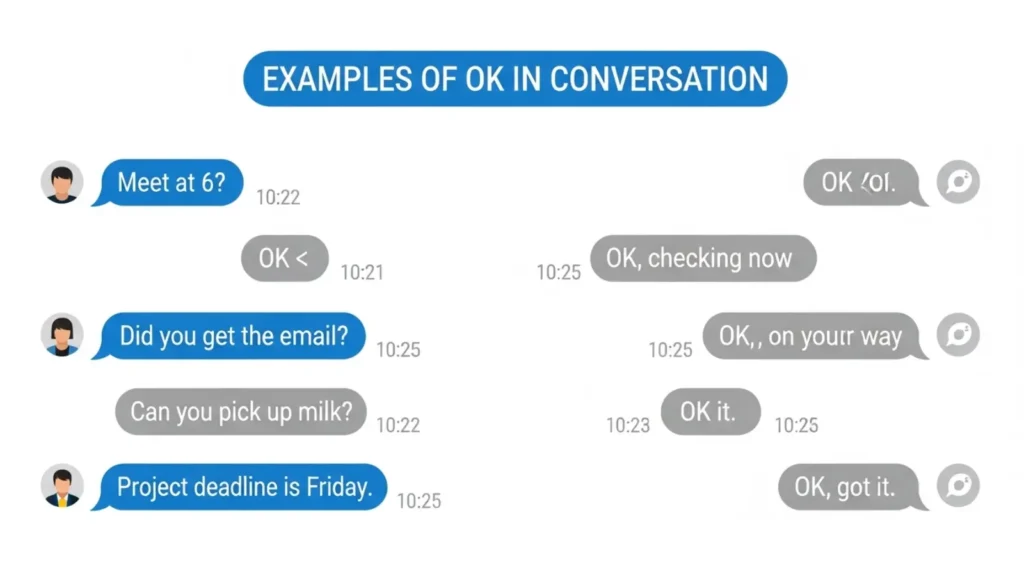
Here are some realistic texting examples showing how ok is used in everyday chats.
1️⃣ Confirming plans
A: we’re meeting at 6 tonight
B: ok see you there
2️⃣ Acknowledging instructions
A: send the file before 5 please
B: ok i’ll do it
3️⃣ Casual agreement
A: let’s watch a movie later
B: ok sounds good
4️⃣ Quick acknowledgment
A: i left your package at the door
B: ok thanks
5️⃣ Responding in a group chat
A: meeting moved to tomorrow
B: ok 👍
6️⃣ Ending a conversation politely
A: talk to you later
B: ok bye
These examples show how ok works as a quick acknowledgment, helping keep conversations simple and efficient.
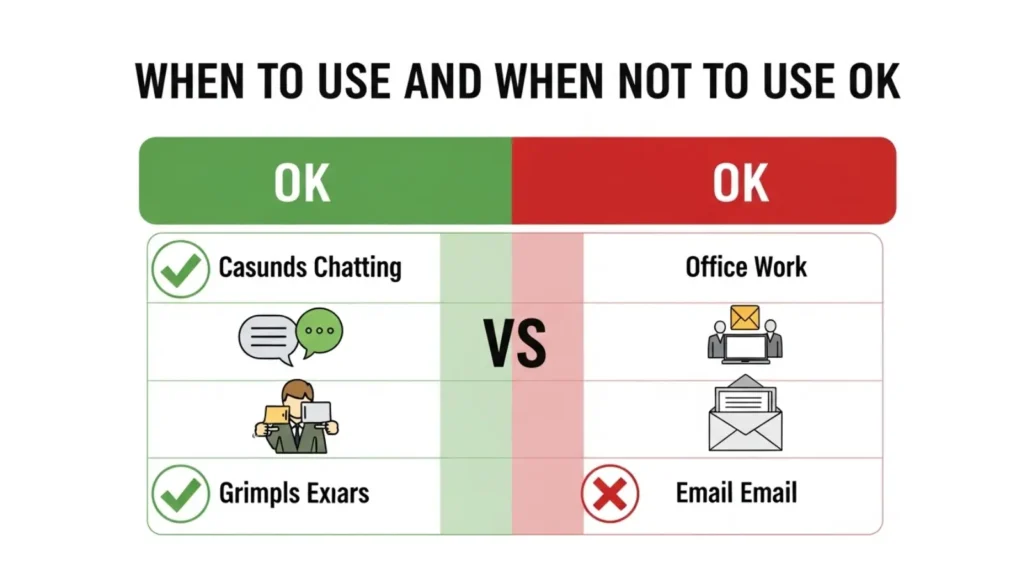
When to Use and When Not to Use OK
Although ok is widely used, it doesn’t always fit every situation.
✅ When to Use OK
Use ok in situations like:
- Casual conversations with friends
- Confirming plans quickly
- Acknowledging information
- Responding in group chats
- Informal online messages
Example:
“send me the address when you arrive.”
“ok 👍”
❌ When Not to Use OK
Avoid using ok in these situations:
- Formal work emails
- Professional communication
- Serious or emotional conversations
- Situations that require detailed responses
Example:
Instead of saying “ok” in a work email, it’s better to write “Understood” or “Thank you for the information.”
Context Comparison Table
| Context | Example Phrase | Why It Works |
|---|---|---|
| Friend Chat | “ok see you later 😄” | Casual and natural |
| Group Chat | “ok got it 👍” | Quick acknowledgment |
| Work Chat | “Understood, thanks.” | More professional |
| “I have received the update.” | Clear and formal |
This shows how ok is best suited for informal conversations rather than professional ones.
Similar Slang Words or Alternatives
Sometimes people use other short replies instead of ok. Here are some common alternatives used in texting.
| Slang | Meaning | When to Use |
|---|---|---|
| K | Very short form of “okay” | Casual chats (can seem cold) |
| KK | Friendly confirmation | Gaming or group chats |
| Got it | I understand | Slightly more polite reply |
| Sure | Agreement or acceptance | Friendly conversations |
| Alright | Similar to “ok” but softer | Casual conversations |
| Sounds good | Positive agreement | Making plans |
For example:
“meet me at the mall later”
“sounds good 👍”
Each of these alternatives helps express agreement while adding slightly different tones to the conversation.
FAQs About OK Meaning in Text
1. Does OK mean yes in texting?
Yes, sometimes. OK can mean “yes” or “I agree.” However, it usually means “I understand” or “that’s fine.”
2. Why do people reply with just OK?
People use ok because it’s quick and efficient. It allows them to acknowledge a message without typing a long response.
3. Is OK rude in text messages?
Not usually. But a single “ok” can sometimes feel cold or uninterested if the conversation requires a more thoughtful response.
For example:
“i’m really upset today.”
Replying with just “ok” may seem insensitive.
4. What’s the difference between OK and K?
Both mean “okay,” but:
- OK feels neutral
- K can sometimes seem too short or dismissive
Example:
“i’ll call you later”
“k” (may sound slightly cold)
5. Is OK formal or informal?
OK is mostly informal. It’s perfect for texting, chats, and social media but not ideal for professional emails.
6. Why do some people use “okay” instead of “ok”?
Some people prefer “okay” because it feels more polite or complete, while “ok” is faster and more casual.
Final Thoughts
Even though it’s just two letters, ok is one of the most powerful and common responses in texting. It can confirm plans, acknowledge information, or simply show that you understand a message.
The meaning of ok usually depends on the context, tone, and relationship between the people texting. In casual chats, it’s perfectly normal and widely accepted.
However, in professional or emotional conversations, it’s often better to use a more detailed response to avoid misunderstandings.
So the next time someone replies with “ok,” you’ll know exactly what it means — and how to use it correctly in your own messages. 💬

I’m Bella Quirk, a creative soul with a love for clever wordplay and witty twists. I enjoy crafting puns that bring laughter and a touch of surprise to every reader. My writing celebrates humor, imagination, and a dash of delightful mischief. Through my quirky puns, I aim to make every moment a little brighter and more fun.