Have you ever been texting a friend or scrolling through TikTok comments and suddenly seen “CFS” pop up, leaving you completely confused? 🤔
You might have paused mid-scroll, wondering if it was a typo, a new trend, or some insider slang you missed.
This is totally normal, modern slang evolves fast, and acronyms like CFS can be puzzling if you haven’t encountered them before.
Quick Answer:
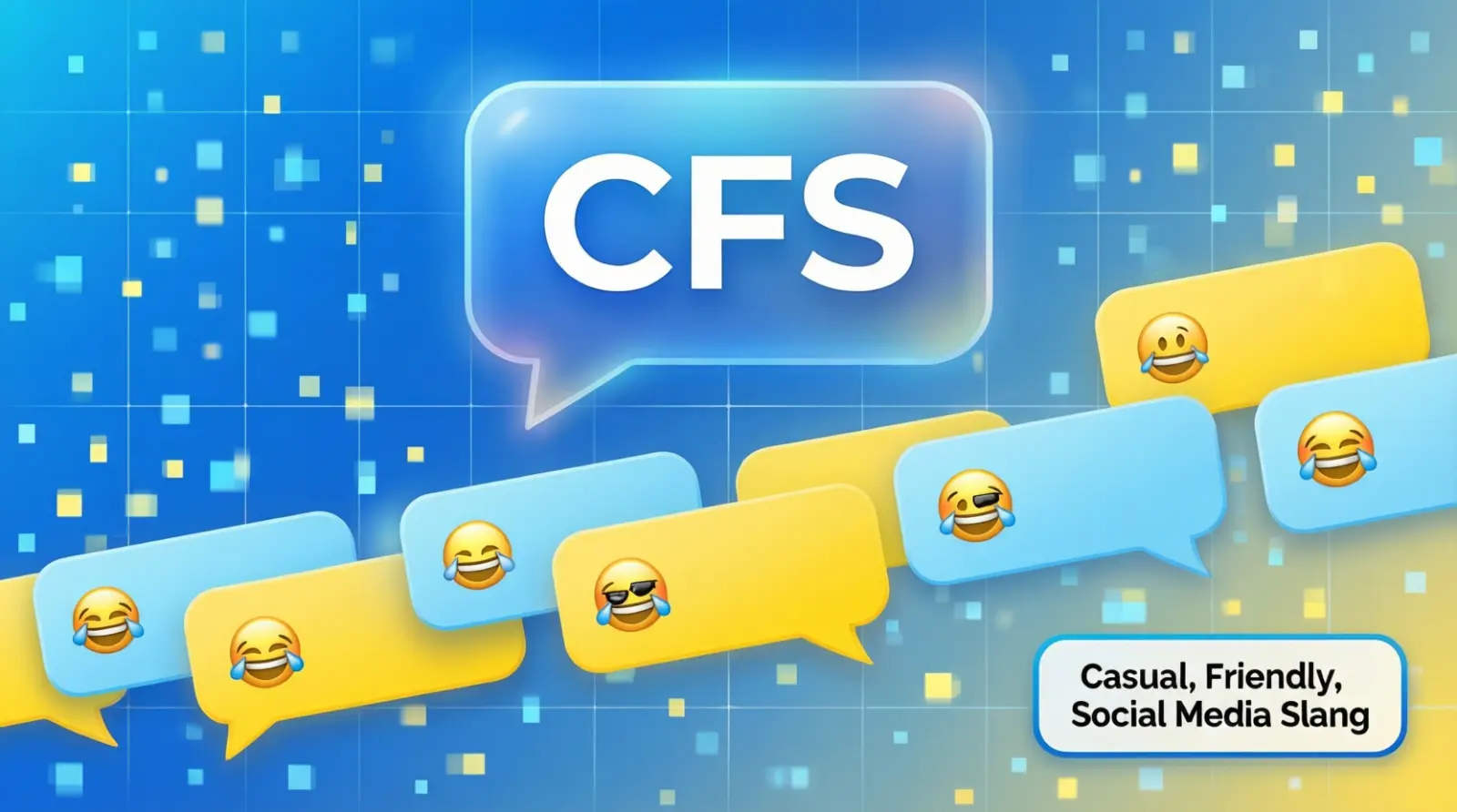
CFS means “Completely Fine, Seriously.” It’s a casual, friendly way to reassure someone that everything is okay or to respond lightly in chats. Whether you’re messaging friends, playing online games, or commenting on social media, this acronym is a handy tool for quick, laid-back communication.
What Does CFS Mean in Text?
CFS stands for “Completely Fine, Seriously.” Essentially, it’s a casual way to tell someone: “Don’t worry, everything’s okay.” Unlike a simple “I’m fine,” CFS adds extra reassurance and can convey a friendly, even slightly playful tone. It’s often used when someone worries about your mood, feelings, or response.
Example Sentence:
A friend texts: “Hey, did I upset you?”
You reply: “CFS 😎”
This shows that you’re okay and want the conversation to stay light. The acronym works well in fast-paced texting environments where keeping things short and friendly matters.
In short: CFS = Completely Fine, Seriously = I’m okay, no worries!
Where Is CFS Commonly Used?
CFS is popular across social media and texting platforms, particularly among younger users:
- 📱 Texting & iMessage — Quick replies to reassure friends.
- 🎮 Gaming chats — Letting teammates know you’re fine or relaxed.
- 🫂 Snapchat & Instagram DMs — Casual, playful interactions.
- 🕺 TikTok comments — Used in lighthearted, friendly threads.
Tone: Casual and friendly. CFS is not appropriate in professional or formal contexts.
Why it works: The acronym is short, easy to type, and adds a fun, social-media–friendly vibe. It can even be paired with emojis like 😄, 😎, or 🙌 to enhance its tone.
Examples of CFS in Conversation
Here are realistic texting examples to show how CFS is used in everyday chats:
- A: “Hey, did I upset you?”
B: “CFS 😄” - A: “You okay with rescheduling?”
B: “CFS, no stress 🙌” - A: “Are you mad about what happened yesterday?”
B: “CFS, all good 😎” - A: “I might be late to the meetup.”
B: “CFS, take your time 👍” - A: “Did you mind me borrowing your notes?”
B: “CFS, I don’t mind 😅” - A: “Hope I didn’t mess things up.”
B: “CFS, seriously, no worries 😊” - A: “Should we cancel plans?”
B: “CFS, it’s fine either way 😄”
Notice the casual, friendly tone in all these examples. CFS is perfect when you want to reassure someone quickly without typing a long message.
When to Use and When Not to Use CFS
✅ When to Use:
- Chatting with friends or peers
- Casual reassurance in social conversations
- Lighthearted, playful, or flirty contexts
❌ When Not to Use:
- Work-related or professional emails
- Serious discussions (health, finance, emergencies)
- Formal settings where clarity matters
Comparison Table:
| Context | Example Phrase | Why It Works |
|---|---|---|
| Friend Chat | “No rush, CFS 😄” | Casual & friendly |
| Work Chat | “Take your time.” | Polite & professional |
| “Please take your time to review this.” | Formal & clear |
This table helps highlight that while CFS is versatile in casual contexts, formal communication requires more traditional language.
Similar Slang Words or Alternatives
| Slang | Meaning | When to Use |
|---|---|---|
| NP | No Problem | Friendly, casual texts |
| TL;DR | Too Long; Didn’t Read | Summarizing long messages |
| SMH | Shaking My Head | Expressing disbelief or mild frustration |
| JK | Just Kidding | Casual joking or playful tone |
| BTW | By The Way | Adding extra info in casual chats |
| TTYL | Talk To You Later | Friendly sign-off in chats |
Each alternative has its own nuance. For example, NP and TTYL are commonly used in texts, while SMH conveys mild frustration rather than reassurance. Using the right acronym in the right situation is key to effective texting.
FAQs About CFS
Q1: Is CFS formal or casual slang?
A: CFS is casual and friendly, ideal for texting friends, gaming chats, and DMs.
Q2: Can I use CFS with emojis?
A: Yes! Emojis like 😄, 😎, and 🙌 make the tone playful and relatable.
Q3: Is CFS common on social media?
A: Absolutely. It appears in DMs, comments, and gaming chats more than formal writing.
Q4: Can CFS be flirty?
A: Yes, context matters. A playful “CFS 😏” can be mildly flirty with friends or crushes.
Q5: Is CFS the same as “I’m fine”?
A: Sort of, but CFS is friendlier and more reassuring than a plain “I’m fine.”
Q6: How do I know if it’s appropriate to use CFS?
A: Use it in casual chats where a short, friendly response is expected. Avoid formal emails or serious conversations.
Conclusion
In today’s fast-paced texting culture, acronyms like CFS make communication quick, friendly, and playful. Whether you’re reassuring a friend, responding in a DM, or chatting in a gaming group, CFS = Completely Fine, Seriously is the perfect way to keep things light and casual. Remember, the key to using slang effectively is context: it works well in social conversations but should be avoided in professional or formal situations. By understanding when and how to use CFS, you can communicate more naturally, stay relatable, and even add a touch of personality to your messages. Emojis help, but the tone always matters. Happy texting! 😄

I’m Sammy Snicker, a pun lover who finds humor in every corner of language. I enjoy crafting clever wordplays that bring laughter and good vibes to everyone. My goal is to make people smile through witty twists and playful lines. With every pun I write, I aim to keep the world giggling one joke at a time.