Have you ever been scrolling through your friend’s text and stumbled upon the word poignant and thought, “Wait… what does that even mean?” 😅
I remember the first time I saw it, someone replied to a heartfelt story with just “so poignant”, and I was left scratching my head.
I knew it wasn’t slang like “LOL” or “BRB,” but it definitely carried emotion.
Quick Answer:
Poignant means “deeply touching or emotionally moving.” It’s a friendly and thoughtful way of showing that something evokes strong feelings, often in a sad or meaningful way.
What Does Poignant Mean in Text? 🧠
In simple terms, poignant is used when something—like a story, photo, or message strikes an emotional chord. It conveys empathy, sensitivity, or reflection.
Example:
A: “I just watched that documentary about rescued animals 🐶”
B: “Wow… that’s so poignant 😢”
Here, B is expressing that the story touched them emotionally.
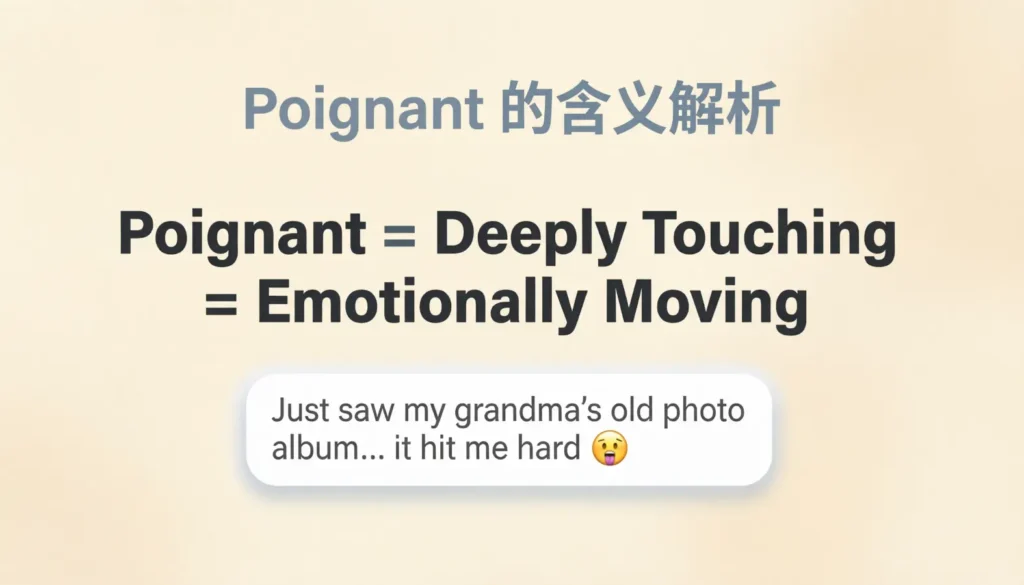
In short: Poignant = Deeply touching = Emotionally moving
Where Is Poignant Commonly Used? 📱
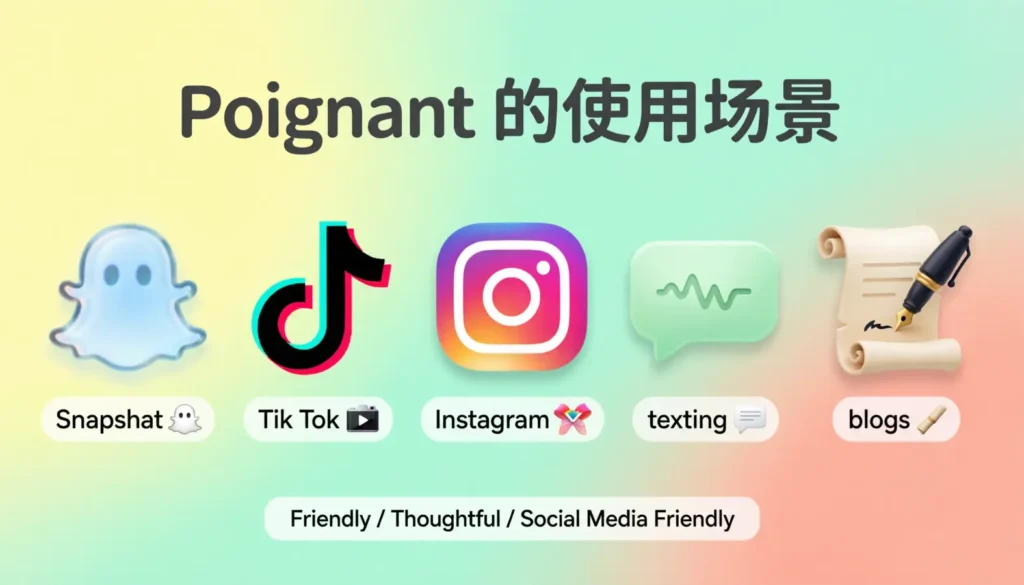
Poignant isn’t your everyday casual slang, but it’s popular in:
- Texting with friends or family 💌 – to react to touching stories or news.
- Instagram or TikTok comments 📸 – when content is emotionally moving.
- Snapchat stories 👻 – when you share heartfelt moments.
- Blog or article comments 📝 – readers might describe a piece as poignant.
Tone: Friendly, reflective, and slightly formal—more thoughtful than casual. Not really flirty or humorous.
Examples of Poignant in Conversation 💬
Here are some realistic texting examples:
- A: “I can’t believe they finally adopted that puppy 😭”
B: “so poignant 🥹” - A: “My grandma’s story about her childhood made me cry”
B: “that’s really poignant 😔” - A: “I watched the short film you recommended”
B: “right? it’s super poignant 💔” - A: “He wrote her a goodbye letter…”
B: “poignant af 😢” - A: “Remember that touching scene in the movie?”
B: “yesss so poignant 😭” - A: “The memorial service was so moving”
B: “poignant indeed 🙏” - A: “That poem gave me chills”
B: “totally poignant ✨”
When to Use and When Not to Use Poignant 🕓
✅ When to Use
- Friendly chats about emotional topics
- Reacting to touching videos or stories
- Showing empathy in personal messages
- Reflecting on meaningful experiences
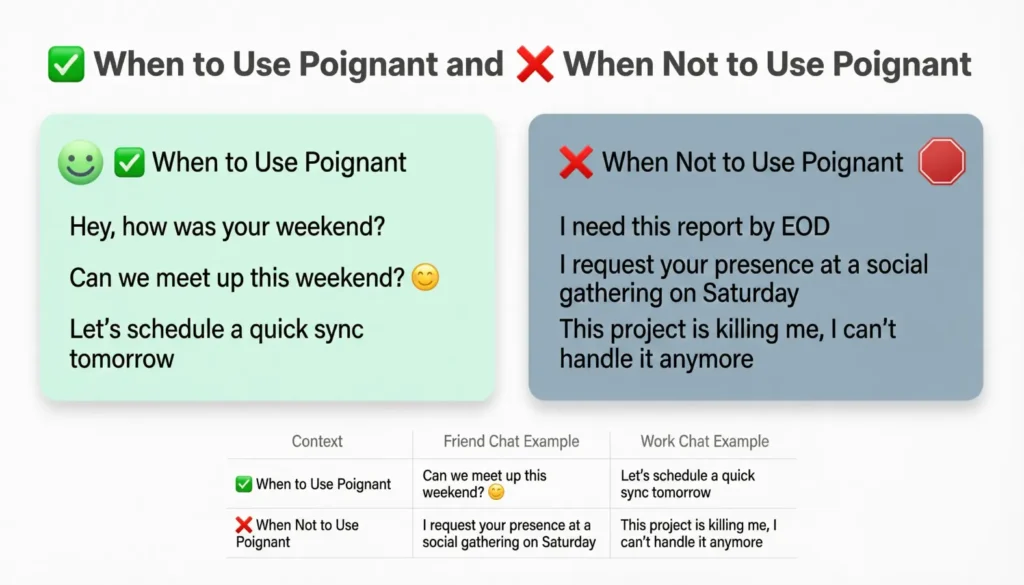
❌ When Not to Use
- Formal work emails
- Urgent or technical instructions
- Casual jokes or memes
- Situations requiring humor or flippancy
| Context | Example Phrase | Why It Works |
|---|---|---|
| Friend Chat | “No rush, poignant 😄” | Casual & friendly |
| Work Chat | “Take your time.” | Polite & professional |
| “Please take your time to review this.” | Formal & clear |
Similar Slang Words or Alternatives 🔄
| Slang | Meaning | When to Use |
|---|---|---|
| Heartfelt | Sincere and deeply felt | Personal messages, storytelling |
| Touching | Emotionally moving | Casual texts, social media |
| Moving | Evokes strong emotions | Stories, films, emotional content |
| Emotional | Stirring or sentimental | Chat reactions, reflective moments |
| Sentimental | Tender, nostalgic feelings | Sharing memories or photos |
FAQs About Poignant ❓
Q1: Is poignant slang?
A: Not exactly slang. It’s a formal word used in casual texting to describe emotional moments.
Q2: Can I use poignant in a flirty text?
A: Not really. It’s more reflective and thoughtful, not playful or flirty.
Q3: Is it appropriate for work messages?
A: Only in empathetic or reflective contexts. Avoid using it in formal or purely technical emails.
Q4: Can I use emojis with poignant?
A: Absolutely! Emojis like 😢, 🥹, or 💔 make your reaction more expressive and relatable.
Q5: What’s the difference between touching and poignant?
A: Both show emotional impact, but poignant is often more reflective and meaningful, sometimes slightly sad.
Final Thoughts 💭
Understanding the word poignant can really elevate the way you react to meaningful moments in texts or social media. It’s not just a fancy word it’s a way to show empathy, reflect on emotions, and connect with others on a deeper level. Unlike casual slang like “LOL” or “OMG,” poignant carries thoughtfulness and sensitivity, making it perfect for responding to touching stories, heartfelt videos, or personal experiences.
Remember: use it when a message moves you emotionally, pair it with an emoji if you like, and avoid it in strictly formal or humorous contexts. With a few real-life examples and alternatives under your belt, you’ll never be confused when someone calls something poignant again. 😌💬

I’m Leo Chuckman, a humor-loving writer who lives for clever wordplay and witty puns. I enjoy crafting jokes that tickle the funny bone and brighten your mood. Making people laugh through creative writing is my greatest joy. With every pun I write, I aim to turn simple words into bursts of happiness.