Scrolling through your messages, you suddenly spot someone type “SYBAU” and pause. You think: Is this a typo? A secret code?
It’s easy to get confused when seeing new slang online. But don’t worry you’re not alone!
Many people encounter this abbreviation for the first time and have no idea what it really means.
Quick Answer:
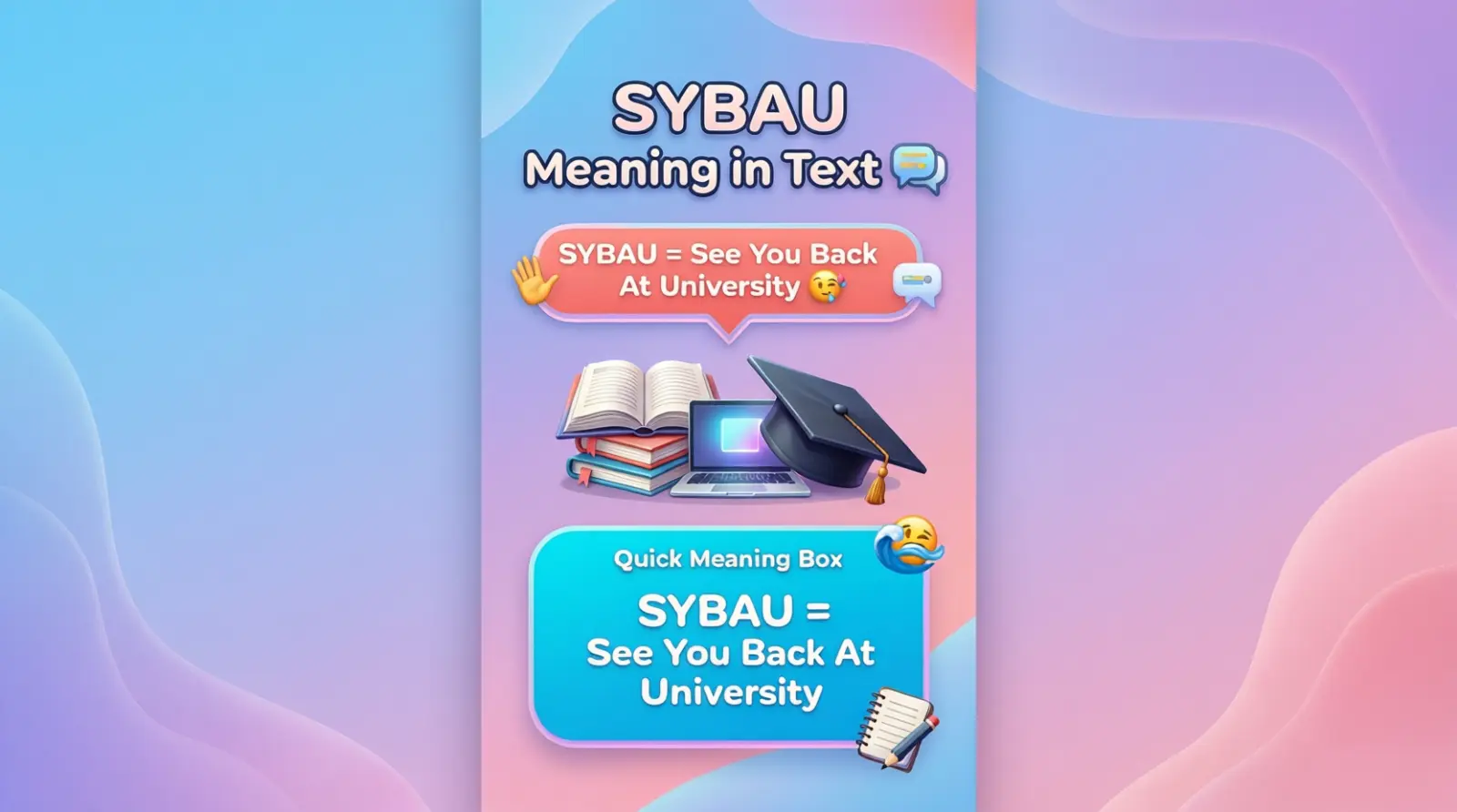
SYBAU means “See You Back At University”. It’s a casual, friendly way to say you’ll see someone again at school or college, often used among classmates or friends.
🧠 What Does SYBAU Mean in Text?
SYBAU is an acronym that stands for “See You Back At University.” It’s usually used when talking to friends or classmates, especially after a break, holiday, or online chat. It’s friendly, casual, and a little playful.
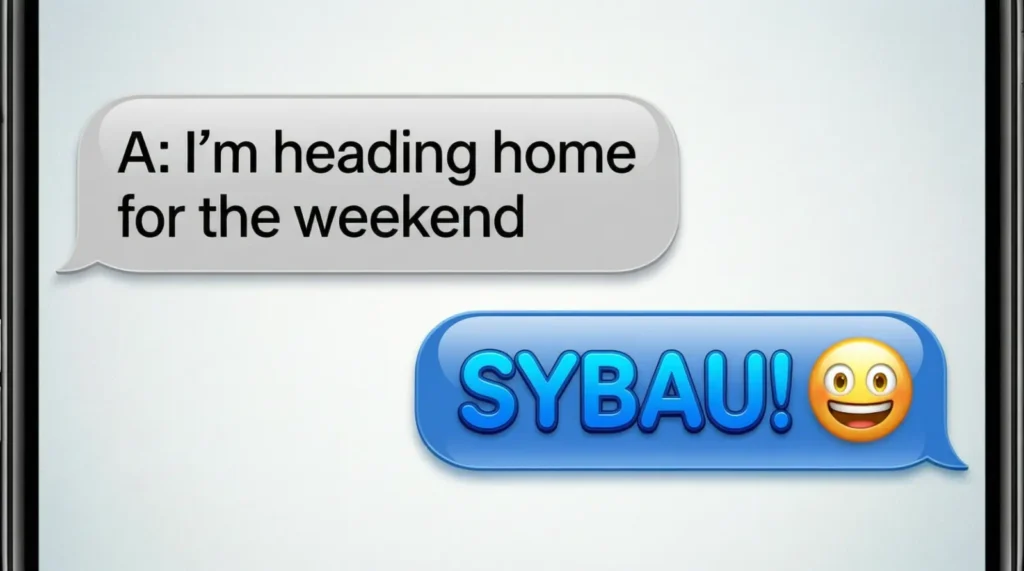
Example sentence:
A: “I’m heading home for the weekend”
B: “Alright, SYBAU! 😄”
In short: SYBAU = See You Back At University = Friendly way to say “See you later at school.”
📱 Where Is SYBAU Commonly Used?
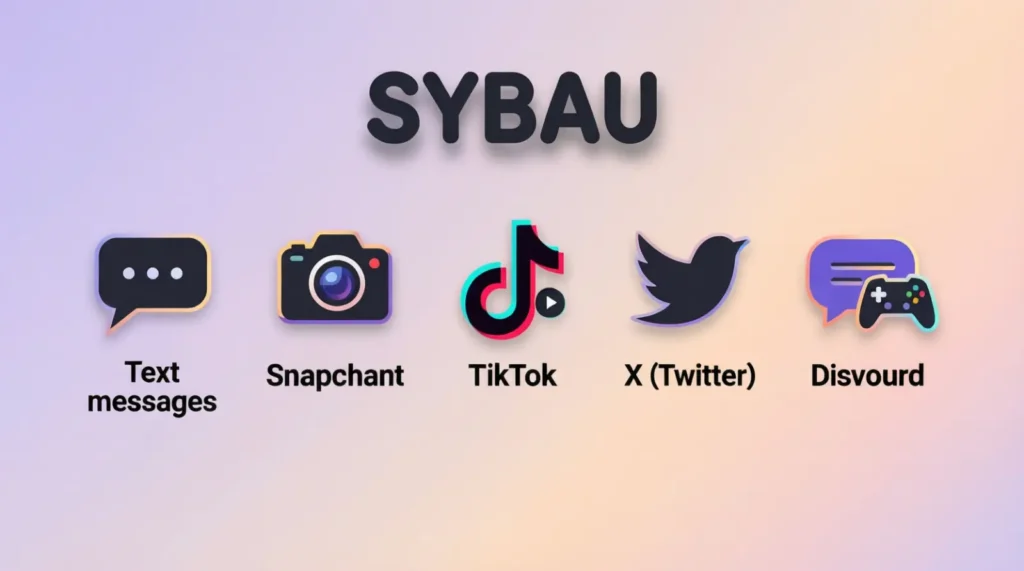
This abbreviation pops up in spaces where students and young people often communicate:
- 💬 Text messages & WhatsApp chats — casual group conversations
- 📸 Snapchat captions or stories — sharing plans or return updates
- 🎵 TikTok comments — playful chats between peers
- 🐦 X (Twitter) replies — student-focused posts
- 🎮 Discord & gaming chats — used among friends in study or game groups
Tone & formality:
✅ Casual and friendly
❌ Not for formal or professional use
😄 Social-media and peer-friendly
💬 Examples of SYBAU in Conversation
Here are some realistic examples to show how SYBAU fits naturally in chats:
Example 1
A: “I’m leaving the library now”
B: “ok, SYBAU later 😎”
Example 2
A: “See you after the break”
B: “yep, SYBAU! 📚”
Example 3
A: “I won’t be online this weekend”
B: “no worries, SYBAU soon”
Example 4
A: “Midterms are over, finally!”
B: “lol, SYBAU next week 💀”
Example 5
A: “Heading home, catch you later”
B: “SYBAU 😄”
Example 6
A: “Can’t wait for campus life to start again”
B: “same here, SYBAU! 🎓”
🕓 When to Use and When Not to Use SYBAU
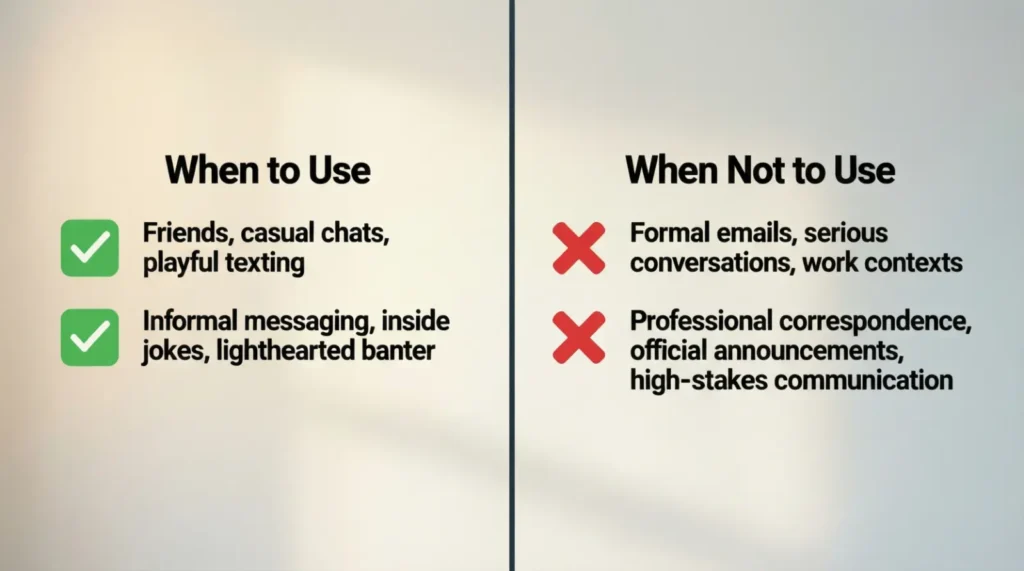
✅ When to Use
- With friends or classmates
- Casual texting or chatting online
- After breaks, holidays, or weekend messages
- Friendly, light-hearted conversations
❌ When Not to Use
- Formal emails or professional communication
- Serious discussions
- Messages to elders or strangers
- Urgent or important announcements
Context Comparison Table
| Context | Example Phrase | Why It Works |
|---|---|---|
| Friend Chat | “No rush, SYBAU 😄” | Casual & friendly |
| Group Chat | “SYBAU after the break” | Light-hearted & peer-friendly |
| Work Chat | “Take your time” | Polite & professional |
| “Please review when convenient” | Formal & clear |
🔄 Similar Slang Words or Alternatives
| Slang | Meaning | When to Use |
|---|---|---|
| CU | See You | Informal, friendly texting |
| BRB | Be Right Back | Quick temporary absence |
| TTYL | Talk To You Later | Casual conversation ending |
| L8R | Later | Playful, quick chat |
| CYA | See Ya | Casual, friendly farewell |
| BBL | Be Back Later | Informal online chats |
❓ FAQs About SYBAU
Is SYBAU formal or informal?
SYBAU is completely informal. Use it only with friends, classmates, or peers.
Can I use SYBAU in social media captions?
Yes! It works great in TikTok, Snapchat, or Instagram captions for student life posts.
Is SYBAU common in all countries?
It’s mainly popular among university students in English-speaking regions, but online communities worldwide use it occasionally.
Can SYBAU be flirty?
Not usually. It’s more casual and friendly than flirty.
Does SYBAU replace “see you later”?
Kind of — it’s a more specific way of saying you’ll meet someone again at university.
✅ Final Thoughts
SYBAU is one of those student-friendly abbreviations that makes texting quicker and more fun. Instead of typing “See you back at university,” you can simply write SYBAU in chats, saving time while keeping the tone casual and friendly.
Whether you’re wrapping up a weekend hangout, ending a group chat, or signing off after class, SYBAU fits naturally into student conversations. Just remember: it’s for peers, informal chats, and friendly social media spaces not professional or serious situations.

I’m Bella Quirk, a creative soul with a love for clever wordplay and witty twists. I enjoy crafting puns that bring laughter and a touch of surprise to every reader. My writing celebrates humor, imagination, and a dash of delightful mischief. Through my quirky puns, I aim to make every moment a little brighter and more fun.